Vodafone 5G Test
An activation that explained 5G with a missed ball at the foot of a football legend, not a spec sheet.
VODAFONE TÜRKİYE · JANUARY 2018
Brief
In 2018, Turkey was on the edge of 5G. Vodafone Türkiye wanted to explain to the Turkish press and its customers what 5G actually meant — concretely, physically and unforgettably. Not with a slogan. With a demo.
The hard part of the brief was clear: 5G's real difference isn't speed — it's latency. "Download a 4K movie in two minutes" makes a great sentence but a forgettable feeling. For a person to actually feel the difference, latency had to show up somewhere it mattered. You couldn't demo an autonomous ambulance. You couldn't stage a remote surgery. But you could put a VR headset on a footballer.
Vodafone briefed us directly. There was no creative agency, no event agency in between — concept, custom hardware, 5G-streamed VR infrastructure, on-site setup: it was all on us.
“You don't see the difference between 4.5G and 5G in a chart — you see it in a single goal scored by a football legend at the other end of the pitch.”
Insight
The power of a new technology isn't learned from a chart — it's learned from a comparison. When someone tells you "5G is fast," the words have no anchor in your head. But the moment you miss the ball on 4.5G and score it on 5G, the words have something to grip. One side-by-side beats ten thousand words of slogan.
The reason sport works so well for this comparison is simple: in sport, milliseconds matter. A footballer striking the ball a few milliseconds early kicks air; a few milliseconds late and they lose the ball entirely. 4.5G's latency — hundreds of milliseconds — is exactly the size of that ruin. 5G's latency — under 10ms — is the natural rhythm of the body in motion. Choosing sport for this demo was, in effect, saying "5G makes sport possible" — without a slide.
The Idea
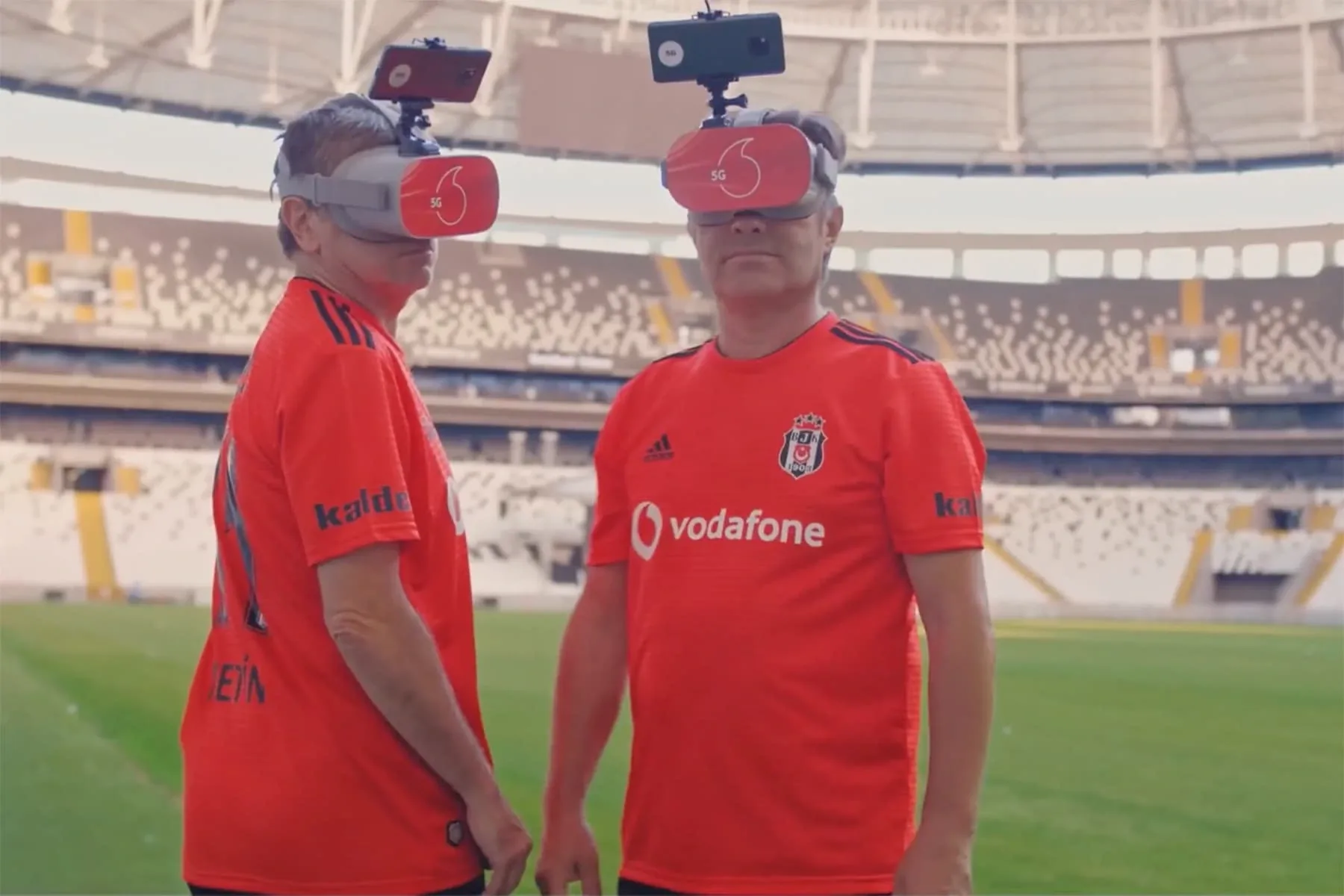
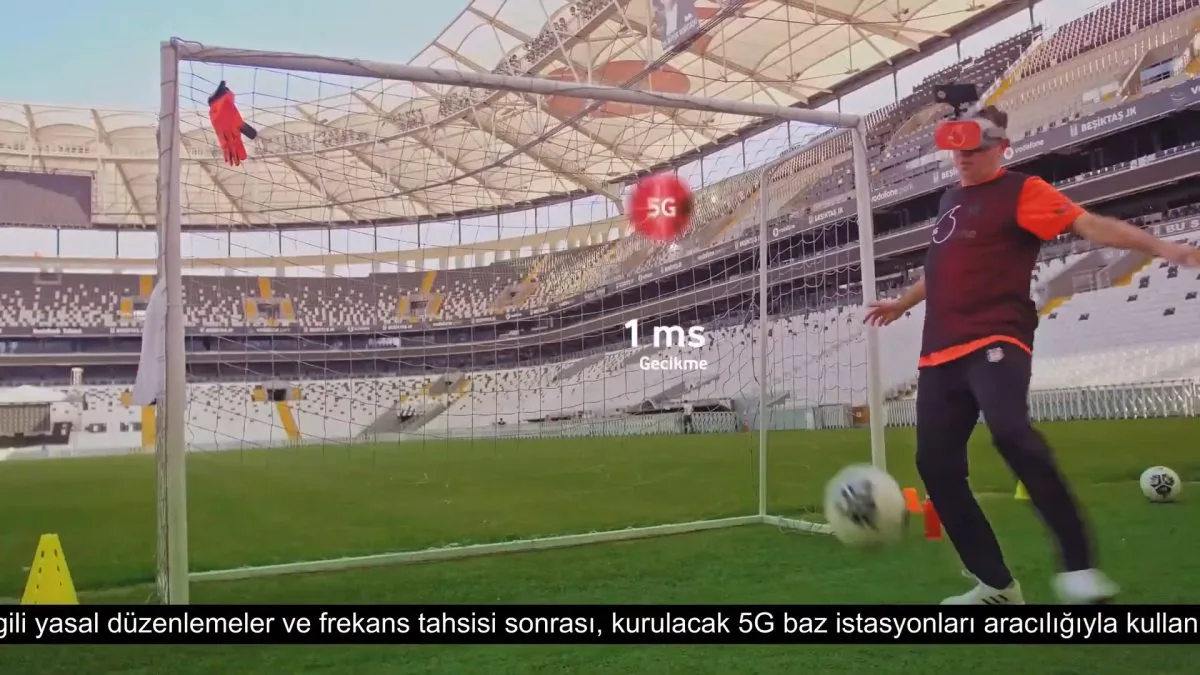
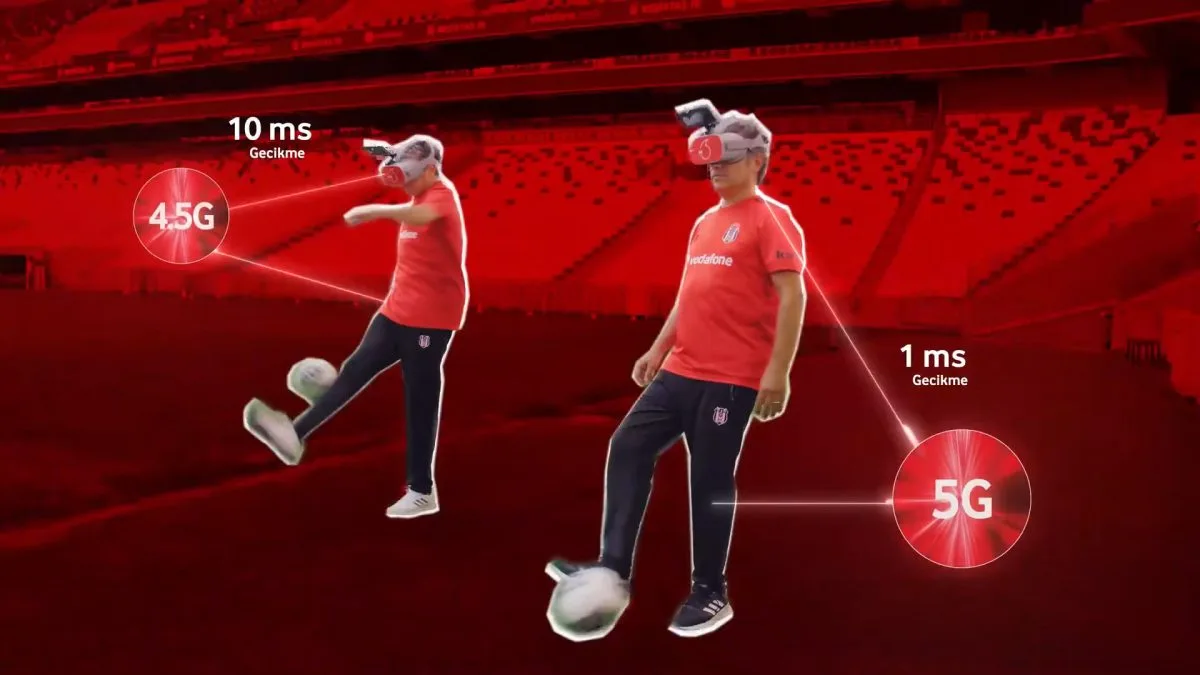
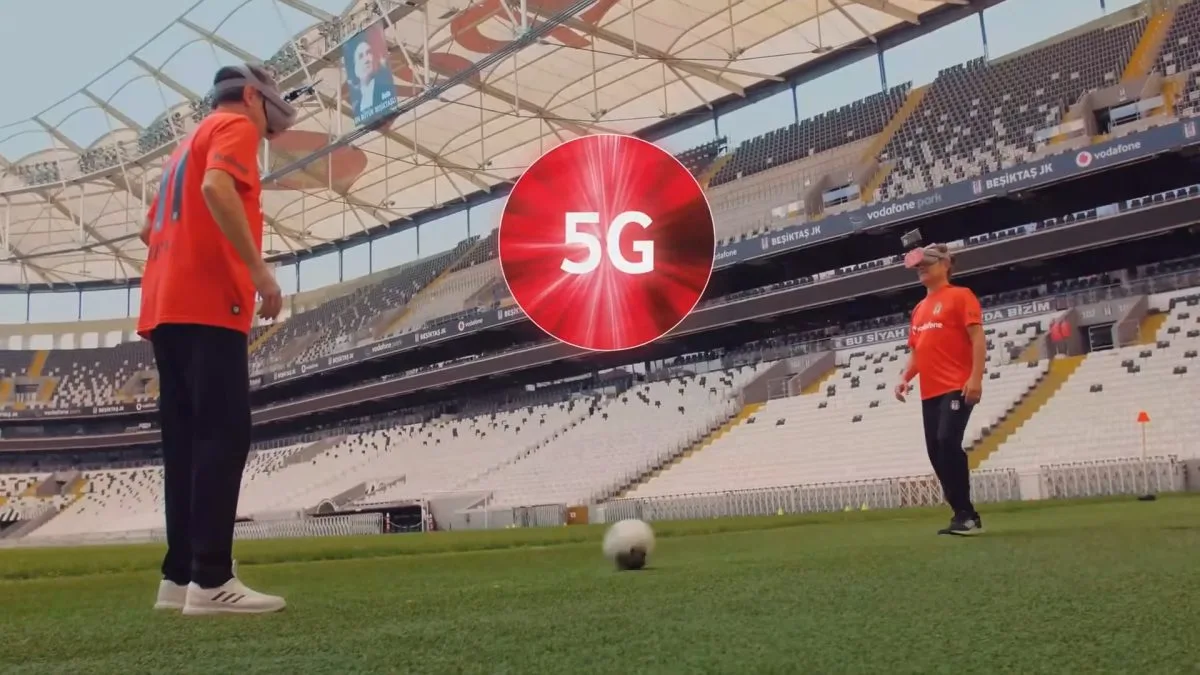
We built a controlled test area inside Vodafone Arena. Onto the pitch we brought two custom VR headsets — physically identical, but one wired to 4.5G, the other to 5G.
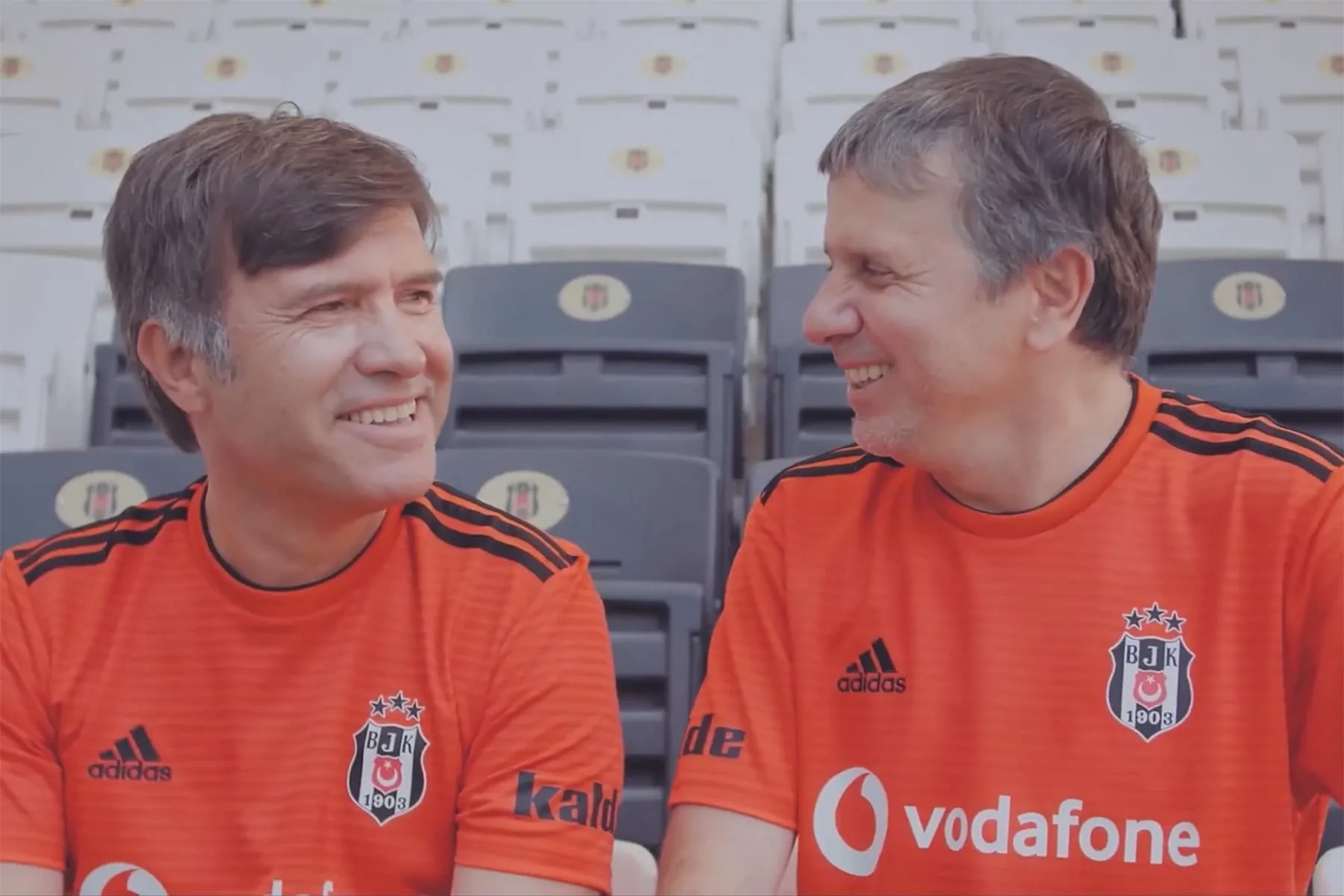
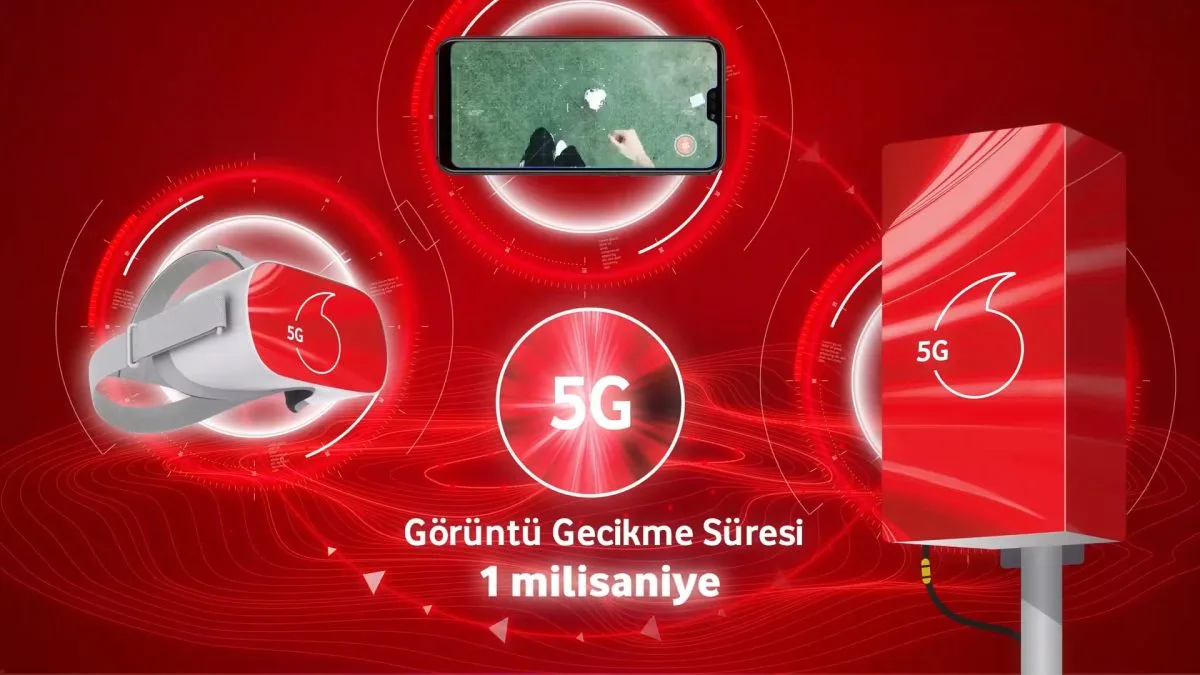
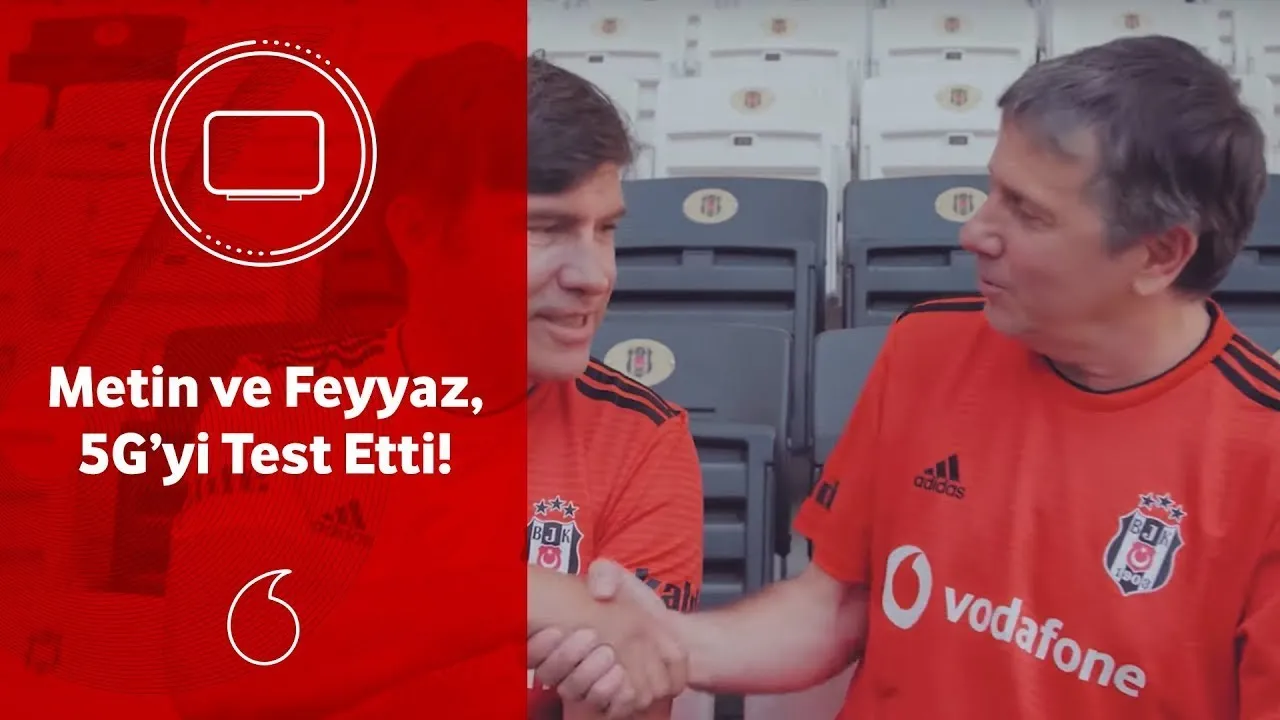
Two former national-team footballers, Metin Tekin and Feyyaz Uçar, put them on. On the opposite side, a camera + mobile device captured the other player's motion, their shot, their swing — in real time. The image was carried to the headsets through the 5G-streamed VR live transmission infrastructure we engineered for the activation.
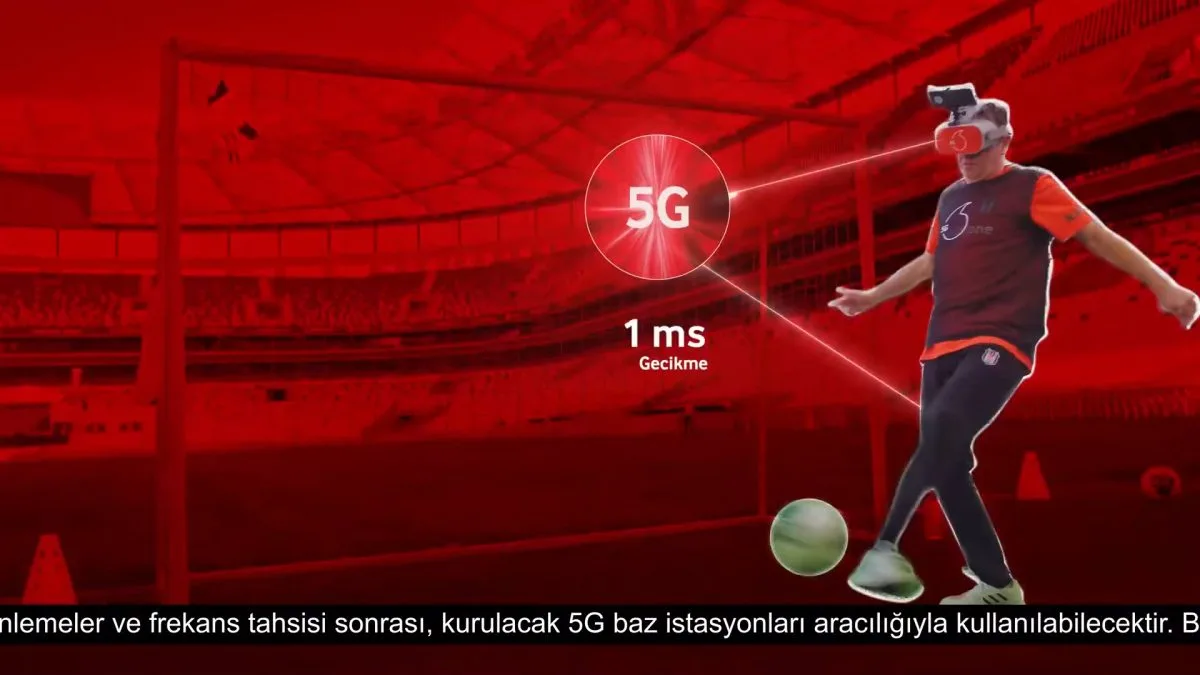
On 4.5G: The ball is coming. The player sees it in their head — but the ball on the screen is milliseconds behind where the real ball actually is. The player tries to strike. By the time their leg moves, the real ball has already passed their foot. They kick air. They miss.
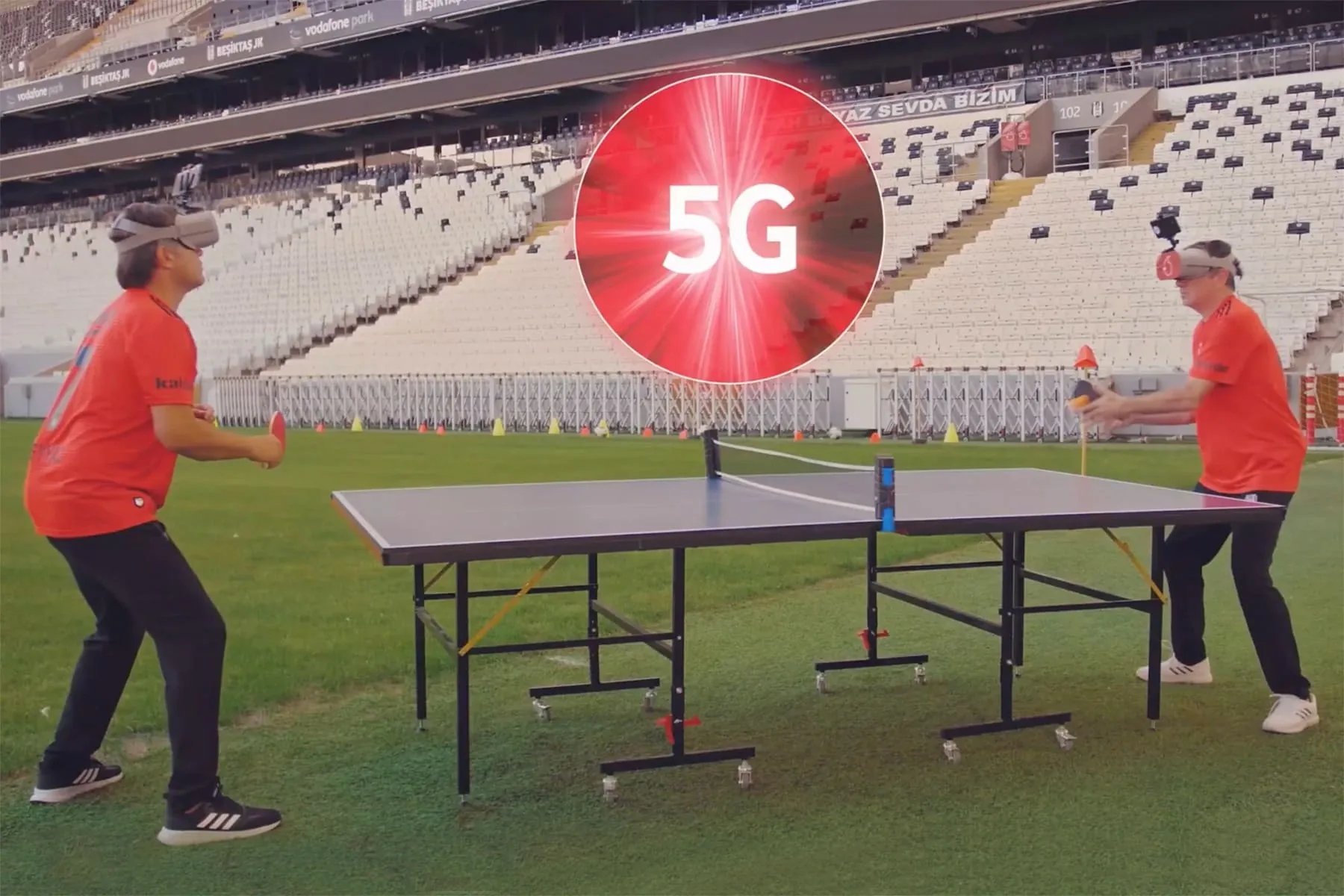
On 5G: Same ball, same player, same swing. But this time the ball on the screen is exactly where the ball really is. The player times the strike right — and scores. A penalty-grade goal. The same setup ran for table tennis: on 4.5G, the paddle swung at nothing; on 5G, it caught the ball.
The demo didn't need a voice-over. The press was there. They saw it with their own eyes. The 5G vision Vodafone's Engin Aksoy delivered from the stage was backed by a goal scored on the pitch. The first major public physical demo of 5G in Turkey was built by Harikalar.
Custom-Built VR Headsets
Two physically identical custom VR headsets, one wired to 4.5G and the other to 5G. We built them from scratch. The only variable was the connection — everything else stayed the same.
Live Stream Over 5G
We engineered the infrastructure that carried the live image from the camera on the far end of the stage straight to the VR headset. On the 5G side, latency dropped below 10ms.
Ball, Shot, Table Tennis
The demos weren't a single game: a football strike, a shot at goal, a round of table tennis. In each one, the ball was missed on 4.5G and met cleanly on 5G.
Sub-10ms Response Time
5G's real difference wasn't speed — it was latency. Sport lives and dies in milliseconds, and the gap between 4.5G and 5G was exactly the difference between missing and scoring.
Execution
The hardest part of a technology demo isn't the visual impact — it's the control. Running two different connection types on the same stage, with the same ball, the same player and the same camera, in a way that proves the only variable is latency. Holding everything else constant is the only thing that makes the demo credible.
Three Problems We Had to Solve
- Same VR hardware, two different links: producing two physically indistinguishable headsets and connecting one to 4.5G and the other to 5G
- Pitch-to-headset live streaming: infrastructure carrying the image from a camera on the far end of the stage to the headset over 5G with sub-10ms latency
- Controlled demo area inside the stadium: a test stage built inside Vodafone Arena where the footballers could move safely and the press could see clearly
Scope
- Concept and stage design — translating Vodafone's 5G message into a physical comparison
- Production of two custom VR headsets (hardware, assembly, connection layer)
- 5G-streamed VR live transmission infrastructure
- Camera + mobile capture system on the opposing side of the pitch
- Demo stage setup inside the stadium, lighting, safety coordination
- Hosting Metin Tekin and Feyyaz Uçar through the demo
- Broadcast and press coordination on the day
Team
- Project Lead & Concept: Atilla Baybara
- Technology Development: Utku Olcar
- Operations: Yiğit Sarı
- Client Relations: Şaban Yılmaz
- + Hardware, VR software and on-site install team
Results
- Turkey's first major public physical demo of 5G — a goal instead of a chart
- An unforgettable press moment at Vodafone Arena — Engin Aksoy's 5G speech happening alongside a goal scored on stage
- Wide press coverage — multiple Turkish media outlets ran the story with the missed-on-4.5G / scored-on-5G comparison
- A physical reference point for Vodafone's 5G communications — the comparison kept being reused in later launches
- Delivered directly between operator and producer, with no creative or event agency in between — concept, hardware, infrastructure and stage from a single source
- Client
- Vodafone Türkiye
- Event
- Vodafone 5G Test Demosu
- Date
- 2018
- Location
- Vodafone Arena Stadyumu, İstanbul
- Players
- Metin Tekin & Feyyaz Uçar
- Production & Technology
- Harikalar
- Project Lead
- Atilla Baybara
- Technology
- Utku Olcar
- Client Relations
- Şaban Yılmaz
- Operations
- Yiğit Sarı
Just a Brief.
Tell us about your project — we'll prepare a custom proposal.
Message Received!
Our team will get back to you shortly.
Project Gallery